
Everything to Know Before You Buy or Sell in 2026If you are searching for a Weber County Realtor, you are not just looking for someone to open doors.You are looking for someone who knows how to win

Dated: January 29 2026
Views: 45
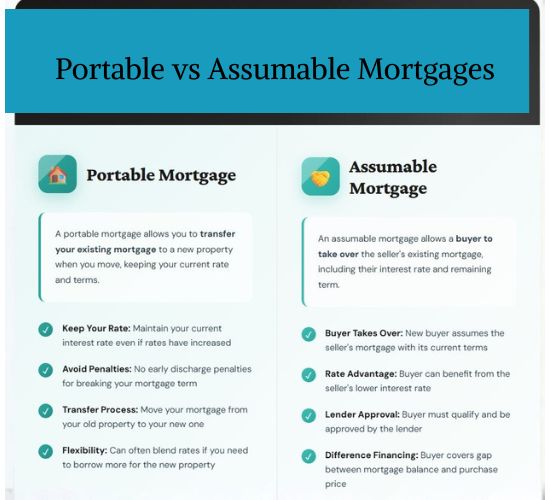
A Portable Mortgage is exactly as it sounds. A mortgage loan that can go with you. In other words, the borrower can transfer the mortgage balance, the interest rate and its terms to a new property. Then sell the original property within a certain time frame. Industry data shows that portable mortgages have several advantages.
Sarah bought her first home for $350,000 with a five year fixed rate mortgage at 3 percent. A couple years later her job changed and she needed to move. Normally this would mean paying off her mortgage and taking out a new loan at todays higher interest rates but instead Sarah used a portable mortgage. She sold her old home and moved her existing mortgage to her new one. She bought a new home for $420,000 and kept her 3 percent interest rate on the remaining balance of her original loan. She only needed a small new loan for the difference. This helped her save money and avoid starting over with a higher interest rate.

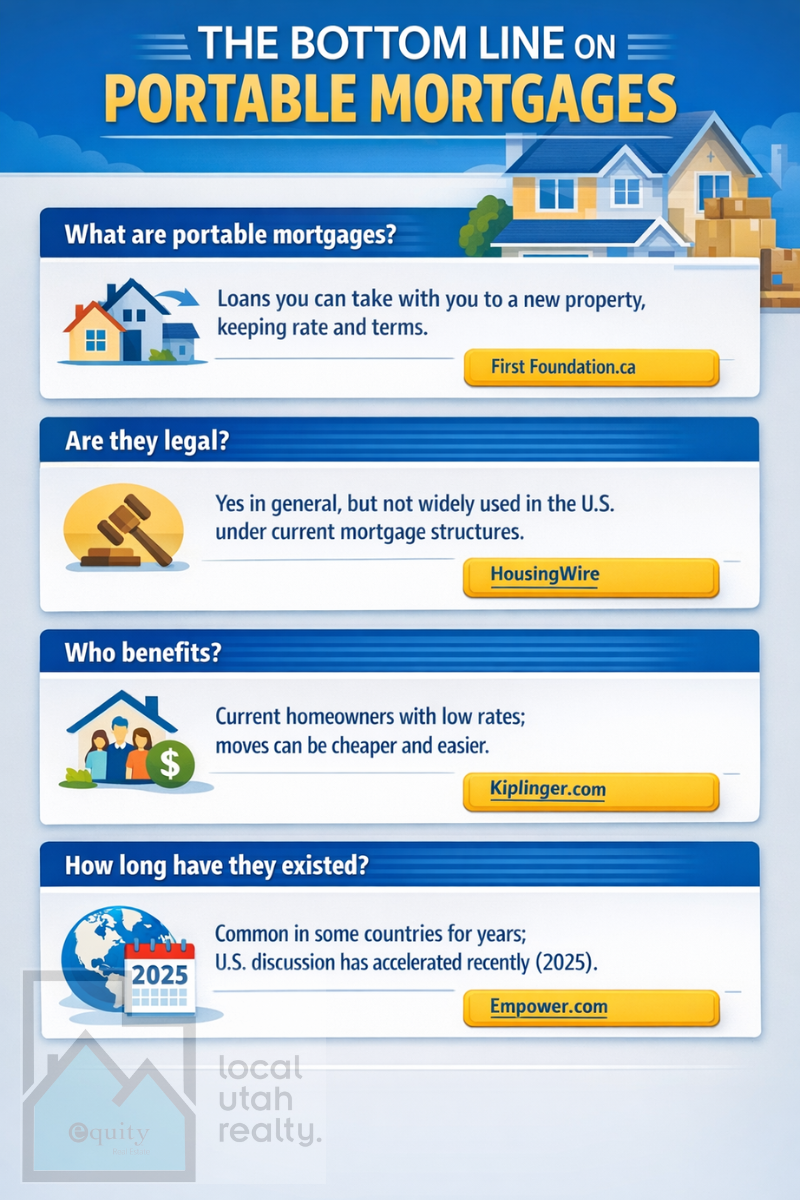
Yes. They are widely used in other countries such as Canada but they are not currently used in the United States. It's not that it can't be done but rather how our current conventional mortgages are set up it doesn't allow for it.
Home owners with low interest rates
Many people are not moving, even though their family may benefit from it simply because they have a really good low interest rate. This would allow them to be able to move and keep their low interest rate.
Seller who want to move without penalties
Often mortgages will have a prepayment penalty or fees attached from getting out of a mortgage that sellers want to avoid. Being able to keep their existing mortgage and moving to a new property is a huge benefit.
The housing market as a whole
The National Mortgage Database shows nearly half of all mortgages have rates below 4%. Portable mortgages would allow these homeowners to enter the housing market without losing what they already secured. It makes for a more fluid housing market.

First time homebuyers. As a first time home buyer you do not have a mortgage to take with you so unfortunately you will acquire one at the market rate. But no worries because first time home buyers qualify for many other grants and assistance programs that mortgage holders do not.
Portable mortgages have been around for several decades, mainly in countries like Canada, the United Kingdom, and Australia. They became more common in the late twentieth century as lenders in those markets began offering shorter term mortgage products, often with fixed rates that last two to five years instead of the full life of the loan. Because borrowers in those countries regularly renew their mortgage terms, lenders built in options that allow a homeowner to move to a new property and keep their existing mortgage rate and terms, as long as they still qualify financially. This feature was designed to give homeowners flexibility when life changes, such as job moves or growing families, made it necessary to buy a different home.
Portable mortgages work well in those countries because most home loans are held directly by banks and are structured around shorter term agreements. The loan is easier to adjust when the borrower moves since the lender is already planning to review and renew the mortgage every few years. Prepayment penalties are also more common there, so portability gives borrowers a way to avoid those costs while staying with the same lender.
In the United States, the mortgage system developed differently. Most home loans are long term fixed rate loans that are bundled together and sold to investors as mortgage backed securities. These investments are built on the assumption that when a home is sold, the mortgage is paid off. Allowing large numbers of borrowers to carry their old loan terms to new properties would make those investments harder to price and manage. There have been a few small experiments with portable style mortgages in the United States in the early two thousands, but they never became mainstream products.
In simple terms, portable mortgages succeeded in countries where loans are shorter term and bank held, and they struggled in the United States where loans are long term and widely sold to investors. That difference in structure is the main reason they are common in some places and rare in others.
Portable mortgages are in the news right now not because they are already widely available in the United States, but because housing officials are seriously exploring whether they should become an option. The discussion is happening because many homeowners feel stuck. They have very low interest rates from recent years and do not want to lose those rates if they move. That has slowed home sales and reduced available housing. The Trump administration is looking at ways to help with affordable housing and portable mortgages are being talked about as a possibility. As more leaders and lenders study the idea, major real estate and financial news outlets are covering it and more buyers and sellers are hearing about it for the first time.

Jordan Smith | Principal Broker of Local Utah RealtyJordan Smith is the Principal Broker of Local Utah Realty, a licensed General Contractor, real estate investor, and one of Northern Utah's most acti....
Everything to Know Before You Buy or Sell in 2026If you are searching for a Weber County Realtor, you are not just looking for someone to open doors.You are looking for someone who knows how to win
Utah Housing Market · 2026 Buyer's GuideUtah Housing Market Is Finally Cracking… Sellers Just Don't Want to Admit It YetInventory is up nearly 6x. Demand has fallen off a
Is Utah Still Affordable in 2026?This is the question almost every buyer is asking right now.“Did I miss my chance… or is there still opportunity?”The answer is not simple.Utah is
How to Buy a House in Utah with Low Income (2026 Guide)Think you can’t afford to buy a home in Utah?You’re not alone.Most first-time buyers assume they need a high income or huge savings
 Wasatch Front Regional MLS - Salt Lake Board of REALTORS® All information deemed reliable but not guaranteed. All properties are subject to prior sale, change or withdrawal. Neither listing broker(s) or information provider(s) shall be responsible for any typographical errors, misinformation, misprints and shall be held totally harmless. Listing(s) information is provided for consumer's personal, non-commercial use and may not be used for any purpose other than to identify prospective properties
consumers may be interested in purchasing. The data relating to real estate for sale on this website comes in part from the Internet Data Exchange program of the Multiple Listing Service. Real estate listings held by brokerage firms other than EQUITY REAL ESTATE® - Select may be marked with the Internet Data Exchange logo and detailed information about those properties will include the name of the listing broker(s) when required by the MLS. Copyright ©2026 All rights reserved.
Last Updated: September 24, 2026 10:14 PM UTC
Show More...
Wasatch Front Regional MLS - Salt Lake Board of REALTORS® All information deemed reliable but not guaranteed. All properties are subject to prior sale, change or withdrawal. Neither listing broker(s) or information provider(s) shall be responsible for any typographical errors, misinformation, misprints and shall be held totally harmless. Listing(s) information is provided for consumer's personal, non-commercial use and may not be used for any purpose other than to identify prospective properties
consumers may be interested in purchasing. The data relating to real estate for sale on this website comes in part from the Internet Data Exchange program of the Multiple Listing Service. Real estate listings held by brokerage firms other than EQUITY REAL ESTATE® - Select may be marked with the Internet Data Exchange logo and detailed information about those properties will include the name of the listing broker(s) when required by the MLS. Copyright ©2026 All rights reserved.
Last Updated: September 24, 2026 10:14 PM UTC
Show More...
